
The records with a parliamentary committee can be provided to an RTI applicant once the report is tabled on the floor of the House, the CIC held on New Delhi, but exempted cases where documents are declared confidential.

The voting for the 13th parliamentary elections was held along with a referendum on a complex 84-point reform package.

The increased numbers of the Opposition bloc would mean that their MPs are likely to head several more panels than the four that they did by the end of the term of the 17th Lok Sabha.
Parliament on Friday approved the long-awaited Competition Bill paving the way for setting up the Competition Commission of India replacing the Monopoly and Restrictive Trade Practices Commission.
A Parliamentary panel has asked the Centre to put on hold its move to set up the controversial anti-terror hub National Counterterrorism Center till all state governments and political parties come on board.
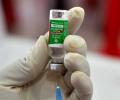
When several opposition MPs expressed their desire to ask questions about the Centre's vaccination policy such as increasing the gap between two doses, the BJP MPs strongly opposed it and few of them even demanded postponement of the meeting and walked out, the sources said.
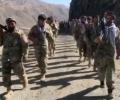
Sources stated that a discussion is likely on the changed geopolitical situation in wake of the Taliban taking over Afghanistan and the drawdown of the US forces from the region.

A parliamentary panel has sought details from two key government ministries on actions planned against social media platforms and influencers who "seem to be working against national interest" following a recent terror attack in Pahalgam. The panel, headed by BJP MP Nishikant Dubey, has asked the ministries of Information and Broadcasting, and Electronics and Information Technology to provide details of any contemplated action to ban such platforms under the IT Act 2000 and the Information Technology (Intermediary Guidelines and Digital Media Ethics Code) Rules, 2021. However, a member of the panel, Trinamool Congress MP Saket Gokhale, has denied receiving any communication related to the issue and claims that the chairperson cannot issue a statement without the approval of the committee.
Overturning its two key decisions within a day, the Parliamentary panel examining the Lokpal Bill on Thursday favoured exclusion of group C officials from Lokpal and not to tamper with the present selection process of Central Bureau of Investigation director despite opposition by at least 10 members.

In the letter, they said as members of the committee, it is their moral and constitutional responsibility to discuss this matter with utmost urgency and the required sincerity.

Congress leader Shashi Tharoor addresses concerns about his recent statements, asserting his alignment with the party's principles and goals.
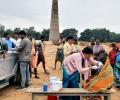
Top officials of health ministry on Thursday informed a parliamentary panel that there are 23 cases of Omicron variant of COVID-19 and authorities are closely monitoring the situation, government sources said.

Members of a parliamentary committee on Thursday raised the issue of Twitter temporarily locking the account of Union Home Minister Amit Shah in 2020 as well as misrepresentation of the Indian map by the micro-blogging site, sources said.
Security and Exchange Board of India Chairman C B Bhave and representatives from the Reserve Bank and Corporate Affairs Ministry are likely to brief parliamentary standing committee on finance about the latest developments in the Satyam fraud case, at a meeting called on Wednesday to discuss the issue.
The parliamentary standing committee on energy has asked the government to take result-oriented steps to revatilise the Dabhol power project.
In a major step to reform the power sector, the much-delayed Electricity Bill was approved by Parliament after Rajya Sabha passed it on Monday incorporating several recommendations of the Parliamentary standing committee.
Young Bharatiya Janata Party leader Varun Gandhi has been nominated as a member of the key Parliamentary Standing Committee on Defence in order to groom him as a future leader of the party and give valuable parliamentary experience.

A parliamentary panel has criticized the Indian government for withholding funds from states that have not agreed to implement the PM SHRI schools scheme, calling the reasoning behind the decision "not factual or justified." The panel has recommended the immediate release of pending funds to states like Kerala, Tamil Nadu, and West Bengal, which have been significantly impacted by the delays.
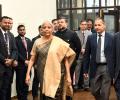
Finance Minister Nirmala Sitharaman on Saturday said she is likely to introduce the new income tax bill, which will replace the six-decade-old I-T Act, in the Lok Sabha in the coming week.
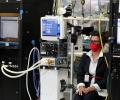
A large number of medical device-manufacturing units have been forced to move to Vietnam and Malaysia due to delays, inconsistent timelines, and a lack of transparency in licensing processes, according to the Parliamentary Standing Committee on Health and Family Welfare.
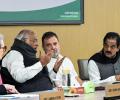
The Congress will launch a nationwide campaign against the repeal of the United Progressive Alliance-era rural employment legislation Mahatma Gandhi National Rural Employment Guarantee Act (MGNREGA) on January 5, similar to the pushback against the three farm laws which eventually forced the Narendra Modi government to rollback its decision, party president Mallikarjun Kharge said.
The committee noted that Indian export market was at present confined to neighbouring nations like Nepal, Myanmar\nand Maldives, besides catering to the replenishment market.

Top external affairs ministry officials on Monday briefed a parliamentary panel about efforts to bring back Indians stranded in war-hit Ukraine, including plans for 13 evacuation flights in the next two-three days to its neighbouring countries and subsequent increase in the number of daily flights to nine, sources said.
Although the CPI-M has emphasised that the railway panel's post is its top choice, Congress floor managers have already conveyed to the comrades that 'it will be difficult' to fulfil their dreams. The CPI-M is likely to get the chairman's seat in the Standing Committee on coal and steel or energy.
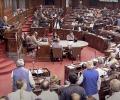
Opposition alliance INDIA on Thursday boycotted a meeting of the Business Advisory Committee (BAC) of the Rajya Sabha to protest Prime Minister Narendra Modi not making a statement on Manipur violence in Parliament, a senior leader said.
Ministry of Corporate Affairs suggests overhaul of rules for independent directors.

In a letter to Dhankhar, Ramesh said sending the Bill to the joint committee of both Houses means "devaluation and denigration" of the status and functions of the standing committee.
In the wake of last month's brutal gang-rape of a student in a moving bus, a Parliamentary Committee is in favour of bringing Delhi traffic police under the city government as it feels criminals take advantage of multiplicity of authorities.
India's senior and subordinate judiciaries have less than 15,000 officers between them, ranging from Munsifs to the Chief Justice.

Government representatives told a parliamentary panel that the US has not officially conveyed to India that it should cut tariffs by April 2.

Both Houses of Parliament were adjourned for the day after repeated disruptions amid uproarious scenes as members of treasury and opposition benches traded charges on the Soros and Adani issues.
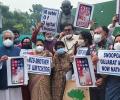
The parliamentary panel on information technology will question government officials on allegations relating to suspected phone tapping of politicians, journalists and others using Pegasus spyware, the committee chairman and senior Congress leader Shashi Tharoor said on Tuesday, and asserted that it is the "most important issue" for many members.

'A brief statement was made by the Army on the sensitive issue. But no questions were taken,' a member said.

The government on Tuesday introduced in Parliament three redrafted bills to replace the existing criminal laws by including various recommendations made by a parliamentary panel.

The parliamentary panel, headed by Bharatiya Janata Party's Sushil Kumar Modi, has also decided to examine remote voting and e-postal ballots for Indians residing abroad.
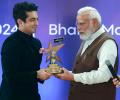
Following complaints from several MPs, a Parliamentary panel on information technology is discussing whether to summon Allahbadia.
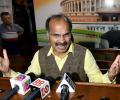
Congress leader in Lok Sabha Adhir Ranjan Chowdhury and some other MPs suspended from Parliament will not be able to attend the meetings of parliamentary committees of which they are a member or chairperson till their suspension is revoked.
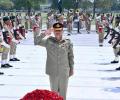
Creating a powerful new chief of defence forces has split the Pakistan military into four competing factions, points out Rana Banerji, who headed the Pakistan desk at RA&W.

Sushmita Dev said it would have been better if there were more women MPs in the panel.
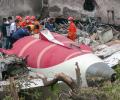
The Aircraft Accident Investigation Bureau (AAIB) is expected to release its preliminary report this week on the Air India plane crash in Ahmedabad, which resulted in the deaths of at least 260 people. The investigation is ongoing, with the help of foreign experts, and the black box and voice recorder data are being analyzed.
